
If your sprinklers are still running on their summer schedule, your garden is probably getting too much water. Dubai’s winter is cooler, the sun is weaker, and water evaporates far more slowly, so most established gardens need noticeably less water from December to February than in summer, then more again as March warms up.
No single number suits every garden, because soil, plants, sun and irrigation systems all differ. This guide gives practical starting points for each plant type, a month-by-month plan, and simple checks so you can adjust to your own garden instead of guessing.
The short answer
- Cut summer run times and frequency by about a third in November, and by 40 to 50 percent from December to February, then check the soil and adjust.
- Water in the morning, not the evening, so leaves dry quickly.
- Water by soil moisture, not the calendar. If the soil 5 to 8 cm down is still damp, wait.
- Raise watering again gradually through February and March.
Why Winter Watering Is Different in Dubai
Dubai’s growing season runs from October to March. According to monthly averages from Acacia Garden Center, daytime highs fall from about 30°C in November to around 24°C in January, with nights near 14°C, then climb back to about 28°C in March.
| Month | High/low | What it means for watering |
|---|---|---|
| November | 30°C / 18°C | Still warm. Reduce gradually |
| December | 26°C / 15°C | Less evaporation. Cut back further |
| January | 24°C / 14°C | Coolest. Soil stays damp longest |
| February | 25°C / 15°C | Days warm. Increase slightly |
| March | 28°C / 17°C | Growth speeds up. Water more, add mulch |
Approximate monthly averages; they vary by year and area.
Three things happen at once: plants use less water, soil stays damp longer (a bed that dries within a day in July can stay moist around three days in January), and overwatering becomes the bigger risk. Constantly wet soil leads to root rot, yellow leaves, and fungus. Dubai’s sandy soil still drains quickly, which is why the soil check matters more than any fixed schedule.
How Much Water Does Each Part of Your Garden Need?
Use these as starting points for an established garden on an automatic system, then adjust with the soil check. They are not fixed rules.
| Plant type | Winter starting point | Notes |
|---|---|---|
| Established lawn | Every 3–4 days (Dec–Feb) | Shorter runs than summer. Keep lawns and beds on separate zones |
| Overseeded lawn | Keep surface evenly moist until germination | Then move to the normal lawn schedule |
| Flower beds, annuals | Every 2–3 days | Newly planted flowers need steady moisture |
| Shrubs, hedges | Every 3–5 days | Deep, less frequent watering builds roots |
| Established trees | About once a week, deeply | Twice a week in November and March |
| New trees and palms | Every 2–3 days at first, easing to every 3–5 | Shallow new roots depend on you |
| Established palms | About once a week, deeply | Check the root zone first |
| Pots and containers | Every 2–3 days, checking first | They dry faster than ground soil |
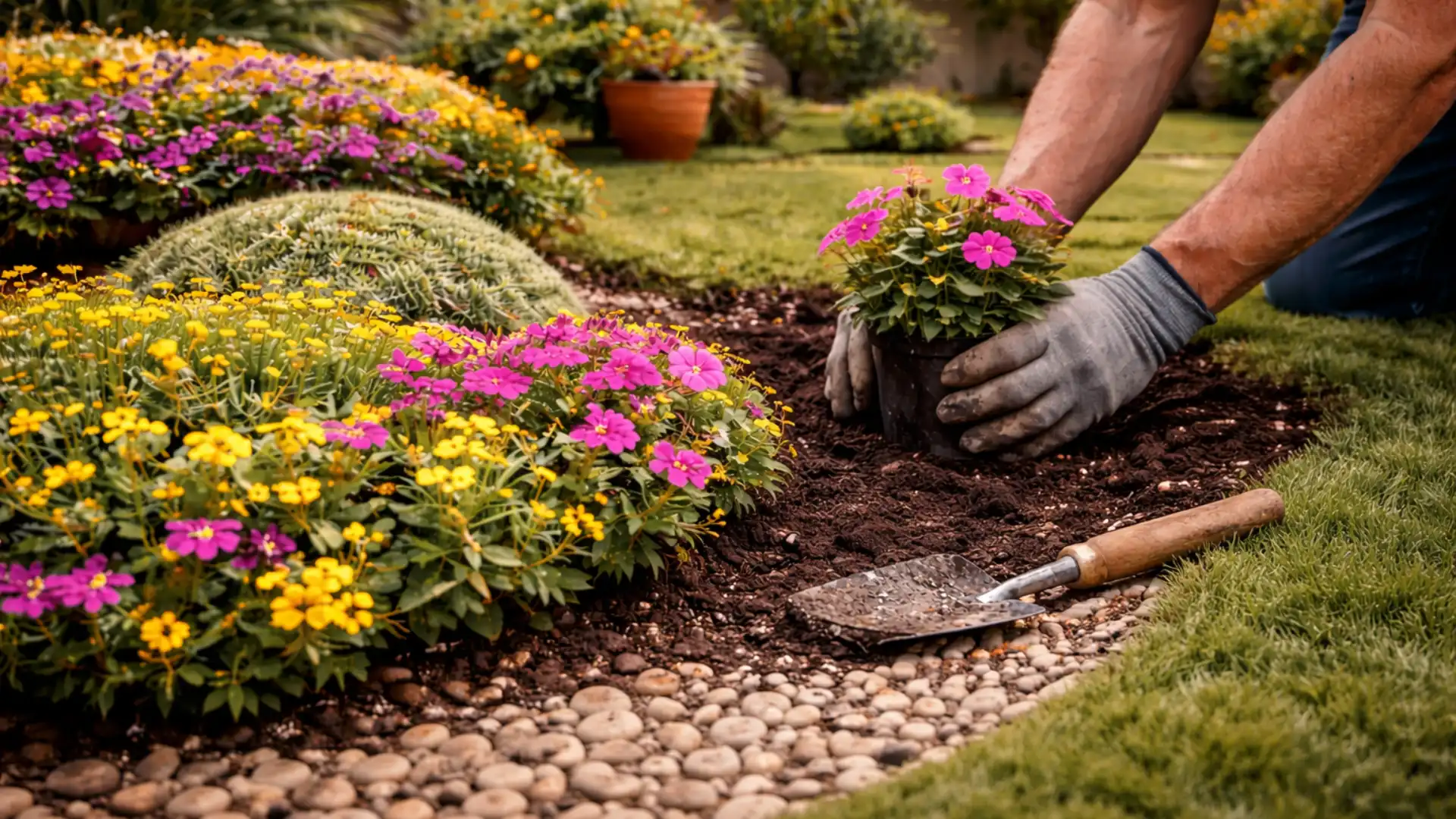
New plantings are the exception. Winter is the best time to plant in Dubai, and new trees, shrubs and flowers should not have their water cut as sharply as established plants, because their roots have not spread yet.
Month-by-Month Watering Plan
Nov
ReduceCut run times by about a third. Switch to mornings. Keep new plants evenly moist.
Dec
Cut backLess evaporation. Check no zone runs longer than needed. Watch for fungus.
Jan
LowestSoil holds moisture longest. If it is still damp, skip the cycle.
Feb
IncreaseDays warm and growth starts. Use a rain delay after real showers.
Mar
Ramp upWater more, add 5–8 cm of mulch, test your system before April.
How to Check Whether Your Garden Needs Water
-
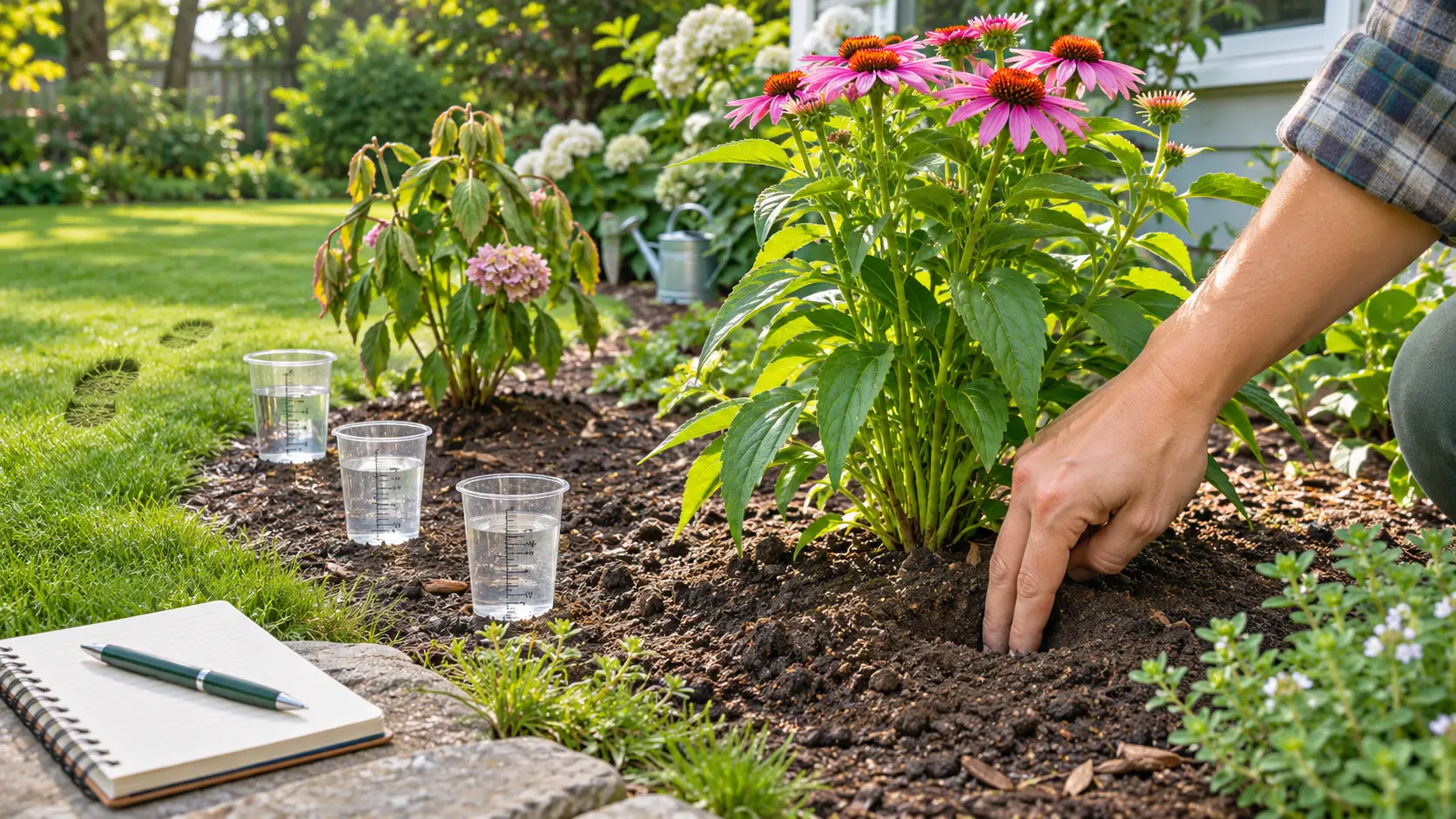
The finger test. Push a finger or screwdriver 5 to 8 cm into the soil. Damp and cool means wait. Dry and loose means water.
-
Look at the plants. Drooping, curling or crispy leaves usually mean too little water. Yellow, soft leaves while the soil is wet usually mean too much.
-
Walk on the lawn. Footprints that stay flat mean stress. A spongy, squelchy lawn is too wet.
-
Run a catch-can test. Put straight-sided containers across a zone, run it for 15 minutes and measure the water collected. This shows what each zone really delivers.
-
Keep a simple log. Note the date, weather and what you changed.
Signs of Overwatering or Underwatering in Winter
| Overwatering | Underwatering |
|---|---|
| Yellow or pale leaves | Dry, crispy leaf edges |
| Soft, mushy stems | Drooping that does not recover by evening |
| Soil stays wet for days | Soil dry and crumbly at 5 cm |
| Mushrooms, algae or moss | Lawn grey-green, holding footprints |
| Fungal spots, powdery mildew | Dry, cracked soil pulling from plants |
In winter, overwatering is far more common than underwatering, especially in gardens that kept their summer timers.
The Best Time to Water in Winter
Water in the early morning. Leaves and grass dry during the day, which lowers the risk of overnight fungal disease, and less water is lost to wind or evaporation. DEWA’s summer guidance suggested light watering between 6pm and 8pm to avoid over-evaporation in the heat, but in the cooler, more humid winter months, evening watering leaves foliage wet overnight. Avoid watering in strong wind, and skip cycles after proper rain.
How to Adjust Your Irrigation System
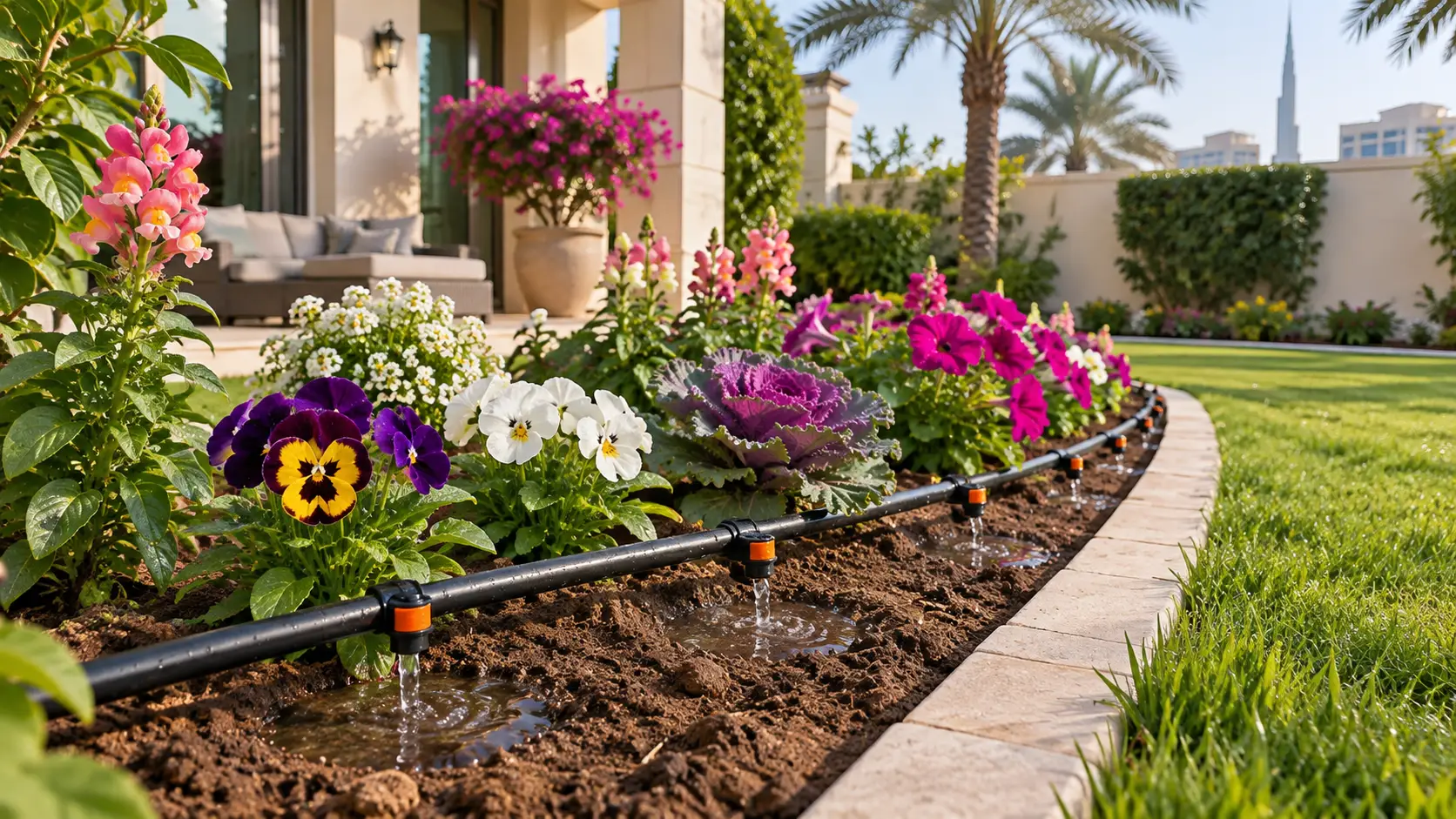
- Use the seasonal adjust (water budget) setting. Try a 30 percent cut in November and 40 to 50 percent from December to February, then fine-tune.
- Reduce frequency as well as duration. Fewer, deeper waterings build stronger roots.
- Set zones separately. Lawns, beds, hedges, trees and pots need different amounts.
- Use a rain sensor or rain delay, and skip the next cycle after real rain.
- Check for leaks and blocked heads. DEWA advises regular checks for leaks, and one broken head can waste more water than any setting you change.
- Consider a smart controller or soil moisture sensor. DEWA has recommended these because they respond to conditions instead of a fixed timer.
Common Winter Watering Mistakes
- Leaving the summer schedule running
- Watering every day
- One schedule for the whole garden
- Watering in the evening
- Cutting water for new plants as hard as for established ones
- Forgetting to ramp back up in March
- Ignoring leaks
Not sure your system is set right?
We’ll inspect your zones, adjust them for the season and set up winter and summer schedules.
Frequently Asked Questions
How often should I water my garden in a Dubai winter?
As a starting point: flower beds every 2 to 3 days, established lawns every 3 to 4 days, established trees and palms about once a week, and new plantings every 2 to 3 days for the first few weeks. Always confirm with the soil check.
Should I water my lawn every day in winter?
No. Daily watering usually means too much water, shallow roots and a higher risk of fungus. Water less often but deeply enough to wet the root zone.
How long should I run my sprinklers in winter?
It depends on your sprinklers’ output. Cut summer run times by about a third in November and 40 to 50 percent from December to February, then check the soil. A catch-can test shows what each zone delivers.
What is the best time of day to water in winter?
Early morning, so leaves dry during the day, which lowers fungal risk and reduces water lost to evaporation and wind.
Do I need to water after it rains?
Not usually. Dubai rain is light and infrequent, but a proper shower can supply what the garden needs. Skip the next cycle and check the soil first.
How do I know if I am overwatering?
Yellow leaves, soft stems, soil that stays wet for days, mushrooms or moss, and fungal spots. Wait until the soil dries at 5 to 8 cm before watering again.