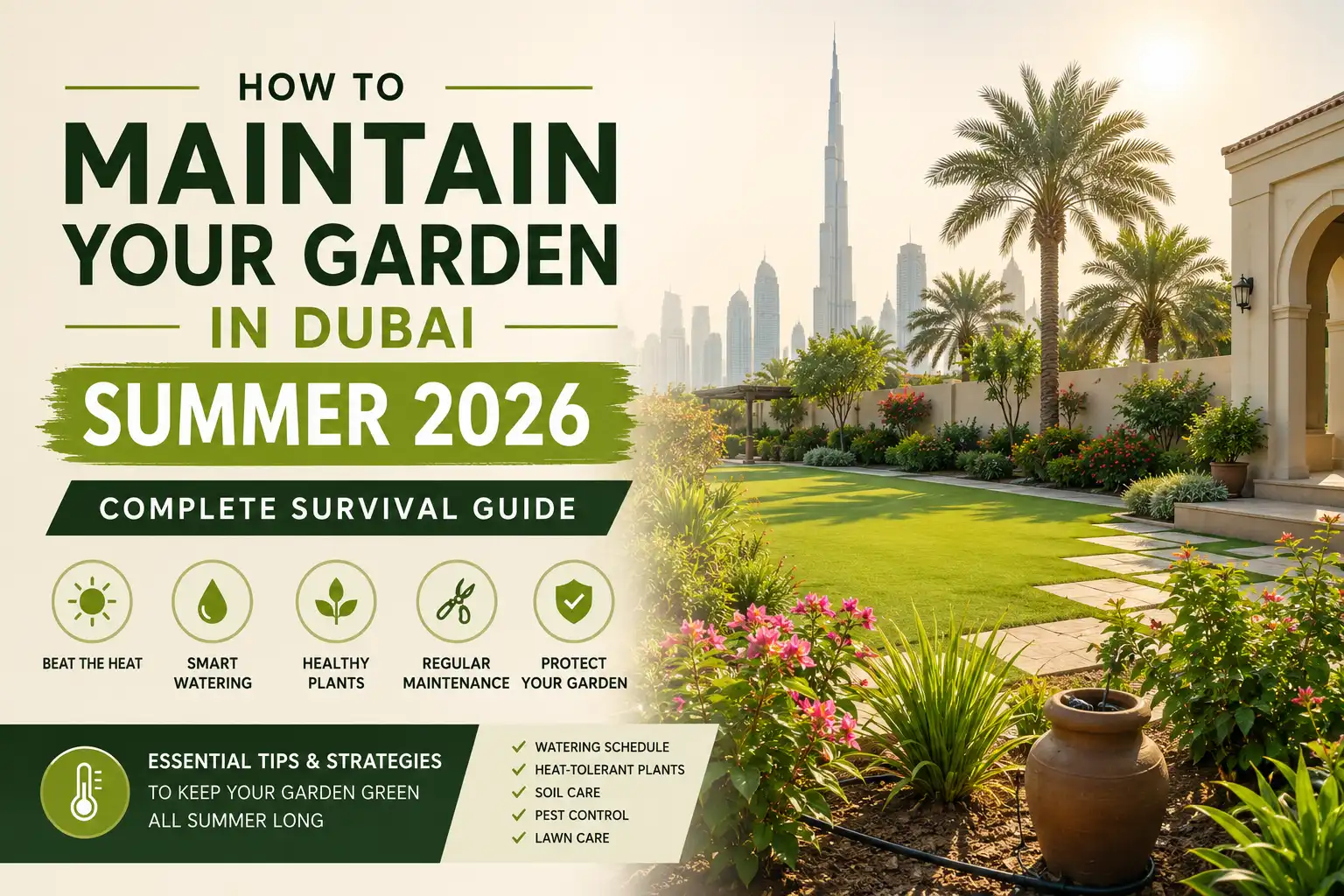
Dubai summers are brutal. Temperatures regularly exceed 45°C, humidity spikes unpredictably, and without the right care, even well-established gardens can deteriorate within weeks. Lawns turn yellow. Plants wilt and dry out. Irrigation systems that aren’t properly managed waste thousands of litres of water while still failing to keep plants alive.
If you have a villa garden in Dubai and you want it to survive the summer, and come back stronger in October, this guide gives you exactly what to do, month by month.
Table of contents
Why Dubai Summer Is So Damaging for Gardens
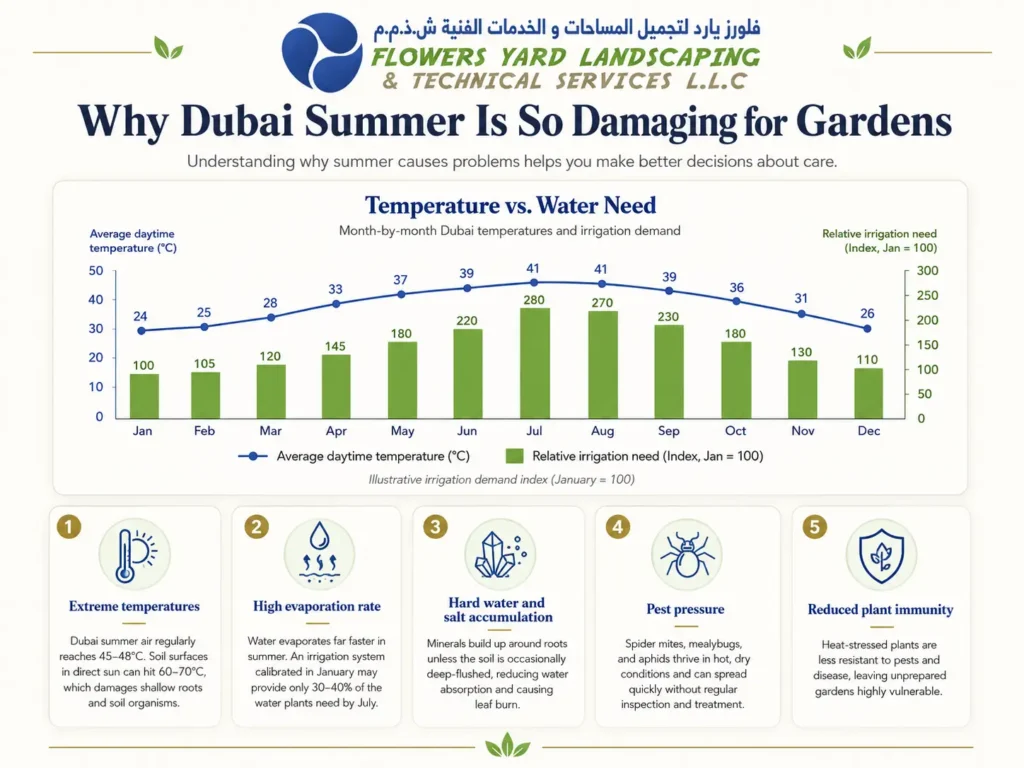
Understanding why summer causes problems helps you make better decisions about care.
Extreme temperatures — Dubai’s summer air temperature regularly reaches 45–48°C. Soil surface temperature can reach 60–70°C in direct sun, which is lethal for shallow plant roots and soil organisms.
High evaporation rate — Water evaporates from soil and plant leaves much faster than in cooler climates. An irrigation system that was perfectly calibrated in January may be providing only 30–40% of the water your plants actually need by July.
Hard water and salt accumulation — Dubai’s water supply has high mineral content. Repeated irrigation without deep occasional flushing causes salt to accumulate in the soil around plant roots, which interferes with water absorption and causes leaf burn.
Pest pressure — Spider mites, mealybugs, and aphids thrive in Dubai’s dry summer heat. Without regular inspection and treatment, infestations can destroy plants within weeks.
Reduced plant immunity — Heat-stressed plants have lower resistance to disease and pest attack. A garden that hasn’t been properly prepared for summer is highly vulnerable.
Dubai Garden Summer Survival — Month by Month
April — Prepare Before the Heat Arrives
April is your most important window. Once temperatures exceed 40°C consistently, your options narrow significantly. Use April to:
Fertilise deeply. Apply a slow-release, high-potassium fertiliser to all lawn areas and planting beds. Potassium improves plant cell wall strength and drought resistance. This feeding builds a reserve that sustains plants through the hot months.
Mulch everything. Apply a 5–8cm layer of organic mulch (wood chip, bark, or coir) around all trees, shrubs, and planting beds. Mulch reduces soil temperature by up to 10°C and cuts evaporation dramatically. This is one of the single most effective things you can do for a Dubai garden before summer.
Audit your irrigation system. Walk every zone of your irrigation system and check for blocked heads, leaks, and dry patches. Test every timer and zone. Increase watering frequency and duration settings — your system will need to run significantly more than in winter to compensate for summer evaporation.
Prune now, not later. April is the last safe window for heavy pruning. Pruning during peak summer stresses plants by removing the leaf area they need to manage heat. Get your major shaping done now.
Remove and replace struggling plants. Any plant that is already stressed, diseased, or struggling in April will not survive summer without intensive care. Remove it now and replace with a heat-tolerant species after October.
May to June — Increase Irrigation, Reduce Intervention
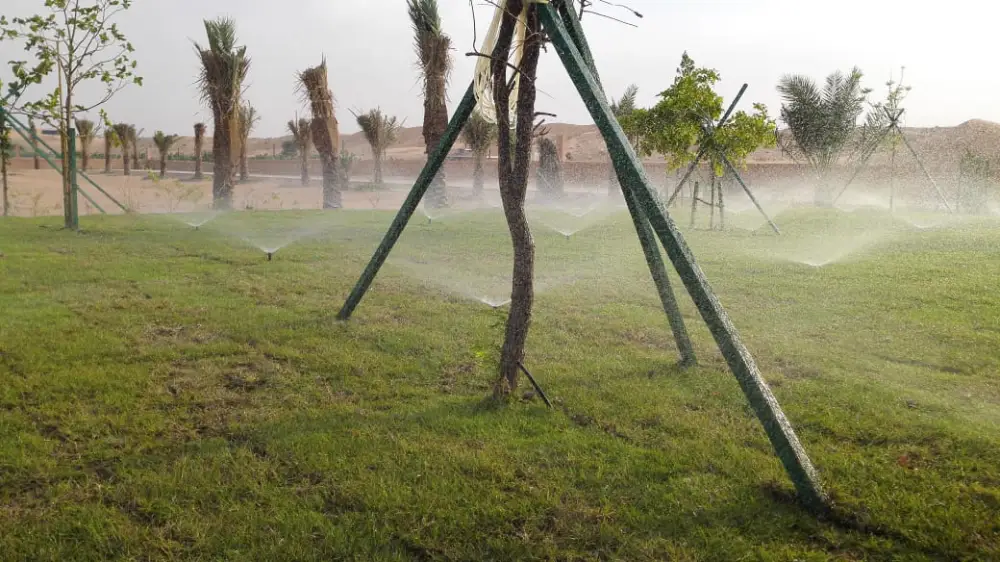
By May, your job switches from improvement to protection. The goal is to get every plant through to October with minimal damage.
Increase irrigation immediately. Your automatic irrigation system should now be running early morning (4:00–6:00 AM is optimal) to maximise water absorption before evaporation peaks. Run your drip system for 20–30% longer than the April setting. For lawns with sprinklers, increase frequency rather than duration — shorter, more frequent cycles improve absorption.
Stop fertilising. Fertilisation encourages new growth, which is fragile and highly susceptible to heat damage. Pause all fertilisation from May until September.
Minimise pruning. Only remove dead, diseased, or damaged plant material. Avoid any aesthetic pruning or heavy shaping — every leaf your plant has is helping it survive.
Add temporary shade for sensitive plants. Shade cloth (30–50% shade factor) can protect delicate plants from direct summer sun. This is particularly important for plants on west-facing walls that receive intense afternoon sun.
Monitor for pests weekly. Check leaf undersides on all plants for spider mites (tiny white or red dots and webbing), mealybugs (white fluffy deposits in leaf joints), and aphids (clusters of small insects on new growth). Early treatment with neem oil or insecticidal soap prevents infestations from becoming unmanageable.
July to August — Minimum Intervention, Maximum Irrigation
July and August are the most challenging months. Your priority is irrigation management and pest monitoring — nothing else.
Check your irrigation system every two weeks. Drip emitters can block in summer heat. Sprinkler heads can crack or misalign. A single blocked zone can kill the plants it serves within days in 45°C heat.
Water deeply, not frequently. Rather than short daily irrigation, run your drip system for a longer duration every other day. Deep watering encourages roots to grow downward — away from the hottest layer of surface soil — making plants more drought-resilient.
Flush your soil once a month. Run your irrigation system for twice its normal duration once a month. This flushes accumulated salt deposits out of the root zone and significantly improves plant water absorption.
Remove dead plant material promptly. Dead leaves and branches create habitats for pests and pathogens. Remove them as soon as you spot them.
Do not plant in summer. Newly planted specimens have no established root system to draw moisture from. Any planting done in July or August will almost certainly fail. Wait until October.
Need help with your Dubai garden this summer?
Book a free garden visit with Flowers Yard Landscaping. We can assess your outdoor space, suggest the right summer garden care, and help keep your plants, lawn, and landscape looking fresh in the Dubai heat.
September — Assess and Begin Recovery
By late September, temperatures start to drop meaningfully. This is the transition month.
Assess plant health. Walk your garden and note every plant that has struggled, died, or needs replacing. Make a list for October planting.
Reduce irrigation slightly. As temperatures drop, evaporation rates decrease. Begin stepping down irrigation duration and frequency in the last two weeks of September.
Begin light feeding. A light application of a balanced NPK fertiliser in late September prepares plants for their autumn growth flush, which starts when temperatures drop below 35°C.
Check irrigation system before the growing season. Service your irrigation system in September — before the planting season begins — so it’s ready to support new planting from October.
Best Heat-Tolerant Plants for Dubai Summer Survival
Choosing the right plants is the most effective long-term strategy for a low-maintenance Dubai summer garden. These species perform reliably through UAE summers with correct irrigation:
Trees: Date palm (Phoenix dactylifera), Ghaf tree (Prosopis cineraria), Neem tree, Acacia
Shrubs: Bougainvillea, Oleander, Lantana, Plumbago, Calliandra
Ground cover: Portulaca (moss rose), Ice plant (Carpobrotus), Gazania
Succulents: Agave, Aloe vera, Euphorbia, Sanseveria
Palms: Foxtail palm, Bismarck palm, King palm (with adequate irrigation)
Common Summer Garden Mistakes Dubai Villa Owners Make
Stopping irrigation to save water. This is the most common and most costly mistake. Reducing irrigation too aggressively in summer kills established plants that would otherwise survive. Save water by optimising your irrigation system, not by running it less.
Heavy pruning in July. Removing large amounts of leaf area in peak summer heat puts plants under enormous stress. Prune heavily in April, and only remove dead material in summer.
Fertilising in summer. Summer fertilisation forces new growth that the plant cannot support in high heat. This new growth often burns and dies, adding to plant stress. Pause all feeding from May to August.
Not monitoring for pests. Spider mites and mealybugs can destroy a plant in 2–3 weeks in summer heat. Weekly inspection and early treatment prevents this.
Planting in summer. Any new planting done between May and September has a very high failure rate. The planting window in Dubai is October to March.
Do You Need Professional Garden Maintenance in Dubai Summer?
For many villa owners, summer is the period when professional garden maintenance delivers the most value. The combination of increased irrigation demands, pest pressure, and the precision required to keep plants alive without causing additional stress is genuinely difficult to manage without experience.
A professional garden maintenance team in Dubai will:
- Adjust irrigation programming monthly as temperatures change
- Identify and treat pest infestations early
- Remove dead or dying plant material before it spreads disease
- Ensure mulch coverage is maintained throughout summer
- Provide an honest post-summer assessment and planting plan for October
At Flowers Yard Landscaping, our summer maintenance programme is specifically designed for Dubai’s villa communities — keeping your garden alive through the hot months and ready for its autumn transformation.
Frequently Asked Questions
How much water does a Dubai villa garden need in summer?
A lawn of 100 sqm in Dubai summer needs approximately 6–10 litres of water per sqm per week, depending on grass type and sun exposure. Total garden water use varies enormously by garden size and plant types — a properly programmed irrigation system managed by a professional is the most accurate way to meet your garden’s needs.
Should I turn my irrigation off if it rains in Dubai?
Dubai’s summer rainfall is minimal and infrequent. The occasional summer rain shower provides very little soil moisture due to rapid evaporation. Do not reduce or pause irrigation after rain unless you receive a sustained downpour of 20mm or more.
How do I know if my plants are underwatered or overwatered in summer?
Underwatered plants show wilting during the hottest part of the day, crispy brown leaf edges, and dry soil. Overwatered plants in Dubai summer often show yellowing leaves, root rot, and soil that stays wet for more than 24 hours between irrigation cycles. Both conditions stress plants — correct irrigation scheduling is critical.
Can I plant new plants in Dubai summer?
We strongly advise against new planting between May and September. Even heat-tolerant species struggle to establish root systems in summer heat without intensive daily watering. The planting season in Dubai is October to March.
Get Professional Summer Garden Care in Dubai
Don’t let Dubai’s summer damage a garden you have invested in. Flowers Yard Landscaping provides professional seasonal garden maintenance for villas across Dubai, with irrigation management, pest control, and expert seasonal care built in.